
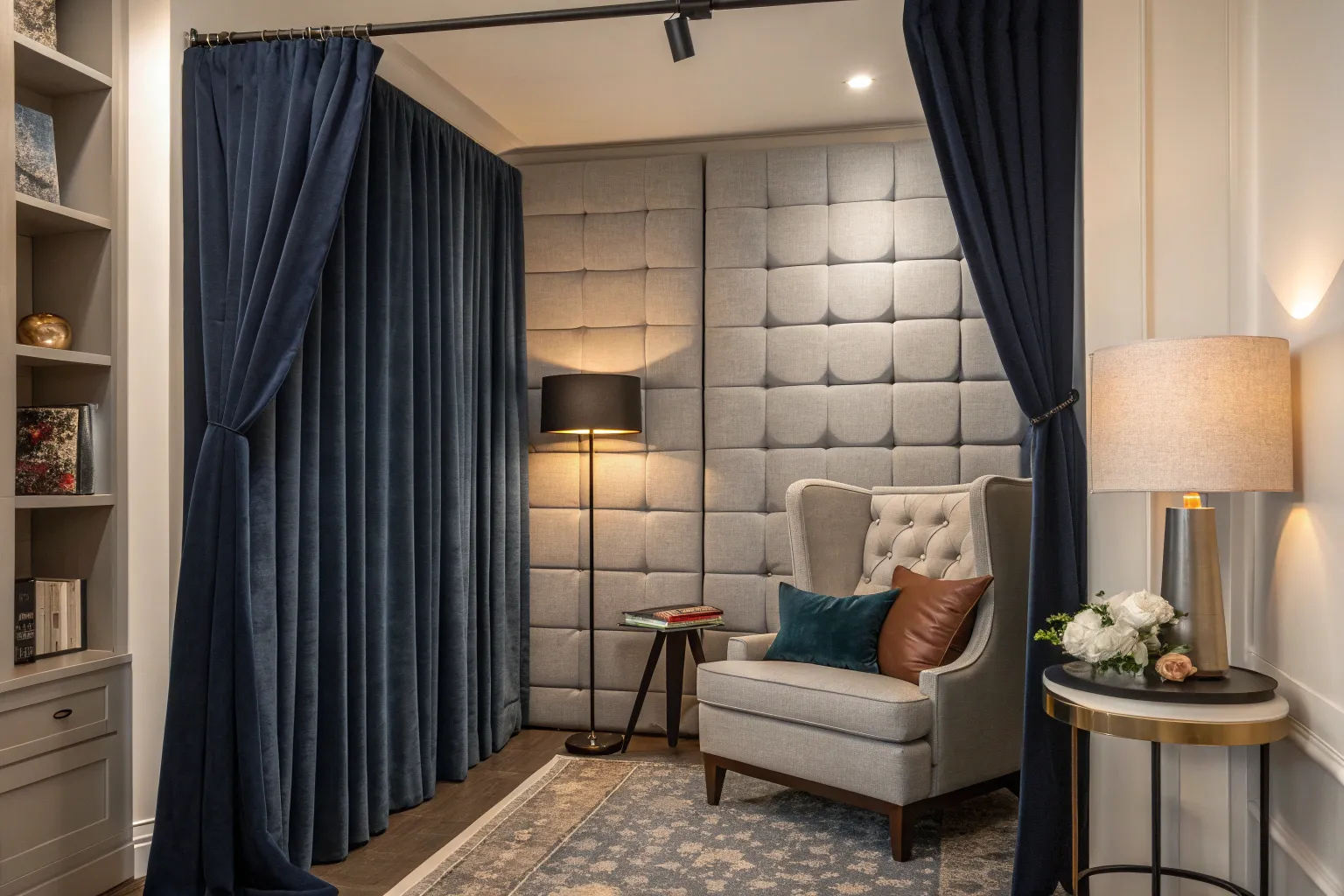
Creating a tranquil space amidst the hustle and bustle of life is a dream for many of us. Let’s explore some clever ways to bring a little more peace and quiet to your home.
Incorporate Soft Furnishings

Furnishings like plush sofas and chairs can absorb sound waves, enhancing the acoustic quality of a room. I adore using them to bring both comfort and quiet.
Some handy options:
- Plush Sofa: Enhance room acoustics with a plush sofa. Enjoy comfort and sound absorption in style.
- Decorative Throw Pillows: Add charm and reduce noise with decorative throw pillows. Perfect for a cozy atmosphere.
- Thick Area Rug: Soften noise with a thick area rug. Complement your space while enhancing acoustics.
Add Acoustic Panels

Installing acoustic panels on your walls can dramatically reduce noise levels. In my own projects, I favor panels that blend seamlessly with the decor, providing functionality without compromising style.
Products that could assist:
- Decorative Acoustic Wall Panels: Enhance room aesthetics and reduce noise with these stylish, sound-absorbing wall panels.
- Fabric-Covered Sound Panels: Improve acoustics and match your decor with these versatile fabric-covered sound panels.
- Soundproofing Foam Panels: Reduce echo and excess noise with high-density foam panels that integrate into any decor.
Use Soundproof Curtains

Heavy soundproof curtains can block out external noise effectively. I always recommend them for bedrooms, as they also add a touch of elegance while ensuring a good night’s sleep.
A few things you might like:
- Elegant Acoustic Curtains: Add style and reduce noise with these elegant acoustic curtains for restful sleep.
- Heavy-Duty Noise Blocking Drapes: Enjoy peaceful nights by installing these heavy-duty noise blocking drapes.
- Thermal Soundproof Window Panels: Install thermal soundproof panels to experience tranquility and enhanced room decor.
Seal Gaps with Acoustic Caulk

Micro gaps around windows and doors are sneaky sound channels. Using acoustic caulk to seal them is a small but mighty step I always take to keep the noise out. #HomeHacks #SoundproofLiving
Some ideas to consider:
- Acoustic Sealant Caulk: Enhance room acoustics by sealing gaps with this soundproofing caulk. Enjoy quieter interiors now.
- Caulk Gun for Sealant Application: Achieve precision in sealant application with this efficient caulk gun. Make soundproofing easy.
- Window and Door Weather Stripping: Improve energy efficiency and reduce noise by adding weather stripping to windows and doors.
Install a Solid-Core Door

Replacing hollow doors with solid-core doors can significantly dampen sound travel between rooms. I often suggest this swap to clients looking for both durability and serenity.
Give these a look:
- Solid-Core Interior Door: Enhance your room’s privacy with this durable solid-core interior door—perfect for sound reduction.
- Soundproof Door Seal Kit: Optimize your door’s soundproofing with an easy-to-install seal kit. Reduce noise effortlessly.
- Door Sweep for Soundproofing: Improve noise control at the door’s bottom with this efficient soundproofing door sweep.
Rug Up with Thick Carpets

Thick carpets or rugs can absorb sound and reduce echoes in larger spaces. I have a penchant for vintage pieces that not only quieten a room but also tell a story.
You might give these a try:
- Vintage Style Area Rug: Enhance your space with a vintage style rug that absorbs sound and adds charm.
- Thick Wool Carpet: Opt for a thick wool carpet to reduce echoes and warm up your room aesthetically.
- Antique Patterned Rug: Discover an antique patterned rug to transform acoustics and beautify any room in style.
Try a White Noise Machine

Sometimes, adding sound can help manage it. A white noise machine is my go-to for bedrooms to mask residual noise. #SleepSoundly #PeacefulNights
Maybe worth checking out:
- Compact White Noise Machine: Improve your sleep with a compact white noise machine that masks distracting noise effectively.
- Portable Sound Machine: Enhance your relaxation using a portable sound machine perfect for travel and home use.
- Multi-Sound White Noise Device: Experience diverse sound options with a multi-sound white noise device for ultimate tranquility.
Build a Bookshelf

A well-placed bookshelf can act as a sound barrier on shared walls. I love using dense wood shelves filled with books to absorb and block noise effectively.
These products might be useful:
- Solid Wood Bookshelf: Transform your space by adding a sound-absorbing solid wood bookshelf today.
- Sound Absorbing Bookends: Enhance your bookshelf acoustics with stylish sound absorbing bookends now.
- Heavy Duty Wall Anchors: Secure your bookshelf with sturdy wall anchors to enhance stability easily.
Opt for Secondary Glazing

Adding secondary glazing to windows is a game-changer for reducing external noise. I often recommend this for homes in bustling neighborhoods.
Consider these options:
- Window Insulation Film Kit: Enhance window insulation and reduce noise with this easy-to-install film kit.
- Magnetic Secondary Glazing Kit: Install magnetic glazing for a noise-proof window solution without hassle.
- Acrylic Sheet for Windows: Use acrylic sheets to create effective secondary glazing for sound dampening.
Decorate with Tapestries

Hanging tapestries can absorb sound and add a layer of artistic flair. They are a personal favorite for living rooms that need both quiet and character. #ArtisticHome #SoundSoftening
A few choices to try:
- Bohemian Mandala Wall Tapestry: Enhance your room’s acoustics and ambiance with this stylish mandala tapestry, adding warmth and softness.
- Large Woven Wall Hanging Tapestry: Create a cozy vibe while dampening noise with this elegant woven tapestry, perfect for any space.
- Artistic Floral Tapestry Wall Decor: Add artistic charm and sound absorption to your room with this beautiful floral tapestry design.
Place Potted Plants Strategically

Plants with thick leaves can absorb sound, creating a natural buffer. I often use them in dining rooms to cultivate a serene ambiance.
Try these:
- Large Indoor Rubber Plant: Enhance serenity and absorb sound with this lush rubber plant in your dining space.
- Fiddle Leaf Fig Tree: Create a calming ambiance with a fiddle leaf fig tree, perfect for sound absorption.
- Indoor Palm Plant: Add a tropical touch while reducing noise with this elegant indoor palm plant.
Hang Thick Blankets on Walls

For a quick fix, hang thick blankets on walls to muffle noise. It’s a trick I picked up in my early design days, perfect for temporary setups.
Possibly handy products:
- Heavy Duty Moving Blankets: Dampen disturbing noises by hanging these heavy-duty blankets on your walls for quick soundproofing.
- Quilted Sound Dampening Blankets: Improve your room’s acoustics by hanging quilted blankets to reduce unwanted sound reflections.
- Thick Wool Blankets: Use thick wool blankets to create a cozier, quieter environment by reducing noise penetration.
Install a Drop Ceiling

A drop ceiling can hide noise-reducing insulation above, ideal for high-ceilinged spaces. #SmartDesign #SoundSolutions
Useful items to consider:
- Acoustic Ceiling Tiles: Transform your space with effective noise reduction using acoustic ceiling tiles. Ideal for high-ceilinged rooms.
- Ceiling Tile Suspension System: Effortlessly install your drop ceiling with a suspension system designed for easy setup.
- Soundproof Insulation Panels: Enhance drop ceiling effectiveness with soundproof insulation panels for superior noise control.
Layer Your Window Treatments

Combine shutters and curtains for a double-layered sound barrier. This approach has always served my clients well, both functionally and aesthetically.
A few helpful options:
- Wooden Window Shutters: Enhance privacy and reduce noise with stylish and sturdy wooden window shutters today.
- Thermal Insulated Curtains: Block out noise and save energy with elegant thermal insulated curtains for your home.
- Heavy Duty Curtain Rod: Support your curtain layers securely with a robust and durable heavy duty curtain rod.
Use Freestanding Room Dividers

Freestanding room dividers can create private, quiet zones in open spaces. They’re versatile tools in my design toolbox for adapting to clients’ changing needs.
Check these products out:
- Foldable Room Divider Screen: Enhance privacy and reduce noise with this stylish and functional room divider. Perfect for any space.
- Acoustic Partition Room Divider: Create quiet zones while adding elegance to your room with this acoustic partition screen.
- Portable Privacy Screen: Easily set up a private area with this elegant and versatile portable privacy screen.
Invest in Soundproof Paint

Special soundproof paint can add an extra layer of noise reduction to your walls. It’s a subtle solution that I’ve used in projects where every decibel counts.
Check if these fit your needs:
- Soundproof Paint for Walls: Enhance your room’s tranquility; apply soundproof paint and reduce noise effectively.
- Acoustic Dampening Primer: Increase noise reduction with acoustic dampening primer, a perfect underlayer for soundproof paint.
- Noise Reduction Coating: Simplify soundproofing by using noise reduction coating; achieve a quieter atmosphere effortlessly.